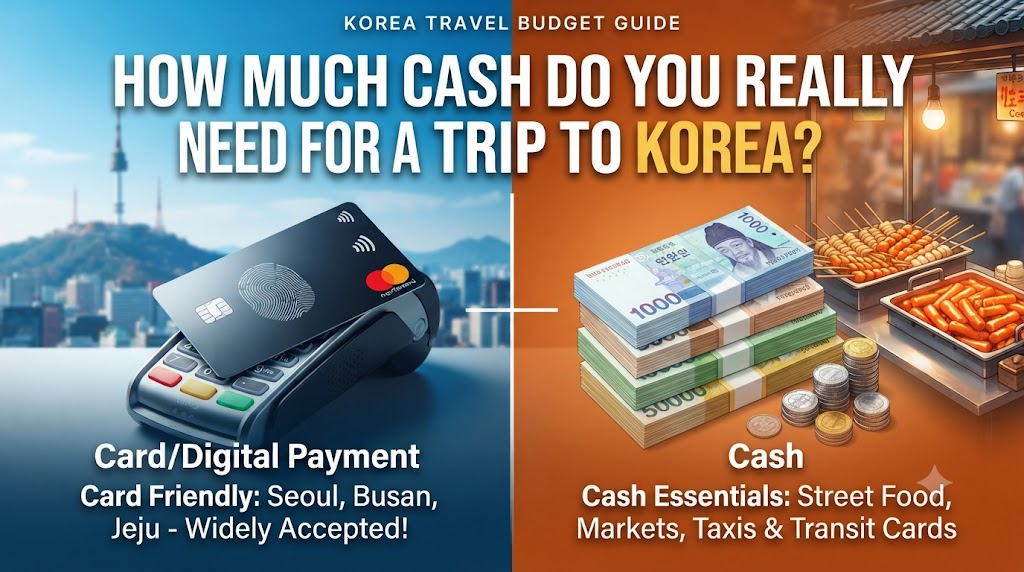
When planning a 2-week trip covering major destinations like Seoul, Busan, and Jeju, one of the most common questions travelers ask is: “How much cash should I bring?”
While South Korea is one of the most credit card-friendly countries in the world, having a small amount of cash is still essential for specific situations. Based on real advice and budgeting experiences shared by travelers, here is a practical breakdown.
1. The Short Answer: You Don’t Need Much Cash!
The overwhelming consensus from seasoned travelers is that you can pay with credit or debit cards almost everywhere—from restaurants and convenience stores to hotels and tourist attractions.
- Estimated Cash Needed: Most travelers agree that bringing about $150 to $200 USD (or equivalent, around 200,000 to 250,000 KRW) in cash is more than enough for a 1-to-2-week trip.
- Unless you plan on heavy shopping at cash-only flea markets or eating exclusively at street food stalls, you will likely struggle to even spend that much cash!
2. When Do You Actually Need Cash in Korea?
Even though cards rule the day, there are a few scenarios where physical cash or a loaded transit card is a lifesaver:
- T-Money Transit Cards: Loading public transportation cards (subways and buses) traditionally relies on cash at station ticket-loading machines, though convenience stores also accept card reloads.
- Taxis and Street Food: Traditional street food vendors, traditional markets, and some local taxis may prefer or require cash.
- Intercity Buses / Regional Transport: As some travelers noted, certain regional buses (e.g., traveling between smaller cities like Sokcho or Gyeongju) might occasionally require cash payment if online booking systems don’t accept foreign credit cards.
3. Smart Money Tips from Reddit Travelers
- Rely on Global Debit/Credit Cards: Many travelers recommend using zero-fee travel debit cards (such as Charles Schwab or Chase) to withdraw local currency directly from Korean global ATMs (found at convenience stores like CU or GS25) whenever needed, rather than exchanging massive amounts of cash at home.
- Watch Out for Foreign Transaction Fees: While standard credit cards (like Visa and Mastercard) work seamlessly across Seoul, Busan, and Jeju, check your bank’s foreign transaction fees beforehand. Some premium cards (like Amex Gold/Platinum) have zero transaction fees.
Useful Links & Financial Tools for Your Trip
To make managing your travel budget in South Korea as smooth as possible, here are some helpful tools, apps, and official resources:
- Currency Conversion & Exchange Rates:
- XE Currency Converter – A reliable tool to check real-time exchange rates for the South Korean Won (KRW) before your trip.
- Smart Travel Cards & ATM Information:
- Charles Schwab Official Site – Frequently recommended by global travelers for debit cards that reimburse international ATM fees, making local cash withdrawals hassle-free.
- Public Transportation & T-Money Top-ups:
- Korea Tourism Organization (Official Guide) – The official tourism site providing up-to-date guidance on T-money transportation cards, subway fares, and payment methods.